
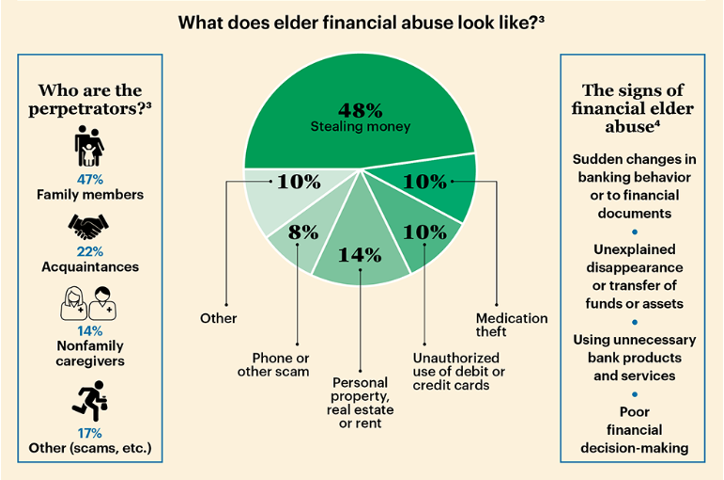
Elder financial abuse robs older Americans of billions of dollars in money, property and other assets every year. As those safeguarding their customers’ finances, community bankers are key watchdogs for monitoring and preventing this abuse.
As relationship lenders and financial first responders, community banks are in a unique position to help shield our elderly customers against these prevalent threats through employee training and the use of technology to spot red flags and report suspicious activity to authorities.
Federated Bank takes the threat of fraud seriously. Our fraud alert team is working every day to spot signs that fraudulent activity is occurring. It’s important though that seniors and especially their family members are also looking out for suspicious activity. For that reason, we wanted to share some tips for seniors and their family members to guard against financial exploitation.
Medicare/Health Insurance Scams
It is difficult to imagine that someone could prey on those in need of medical assistance, but unfortunately, Medicare fraud is all too common. Criminals are posing as Medicare or medical supply representatives to obtain personal information or provide bogus services and use the information to bill Medicare or assume an identity to perpetrate fraud. As a good rule of thumb, never share personal or financial information with anyone who contacts you out of the blue.
Zoom Phishing Emails and Internet Fraud
Con artists are also capitalizing on the rise in video meetings, registering thousands of fake Zoom-related internet domains to send phony emails, texts, or social media messages to trick consumers into clicking on bogus links to address “account suspension” or “meeting” notices. Those that take the bait inadvertently download malware (malicious software) on their computer, exposing their personal information to potential use by criminals.
Internet scammers are also known for sending fake text messages alleging trouble with an internet account, credit card, bank account or shopping order. Many contain realistic information to lure you into clicking on a link and divulging personal information.
To limit your exposure, avoid clicking on links from unsolicited emails or texts. If you suspect a problem with an account, contact the bank or service provider directly.
Telemarketing/Phone Scams
Seniors schooled in etiquette may frown upon “hanging up the phone” or simply saying “no” to unsolicited calls, but taking these calls leaves the door open to criminals posing as company representatives. Three notable examples include:
- The pigeon drop: con artists pretend to share found money in exchange for a “good faith” payment drawn from the contacted person’s bank account.
- The fake accident ploy: con artists create a false narrative that a loved one has been injured in an accident and needs money for medical expenses.
- Charity scams: con artists solicit funds on behalf of a charity for which they are not affiliated with or is not legitimate.
Remember, if it’s too good to be true, or if it’s an outlandish or unverifiable story, it could very well be a scam. If you want to donate to a charity, go directly to the source. And if you are worried about a friend or family member, verify the information with them directly.
Unfortunately, scams are always changing, making fraud nearly impossible to fully eradicate, but we’ll never stop looking out for your benefit and encourage you to consult the Federal Trade Commission’s “scam alert” page for information about the latest scams targeting consumers. Our community bank employees are trained in the latest fraud prevention techniques and are available as a resource as well. We can help you spot potential scams and take appropriate measures to protect your account if you suspect you have been a victim of financial fraud. Contact your local Federated Bank office if you have questions.
 Member FDIC
 Equal Housing Lender